
I. Prelude: Allegro spiritoso; II. Soliloquy: Andantino; III. Blues: Slow, relaxed; IV. Hornpipe
That Paul Patterson’s music possessed a razor-sharp sense of humour was already evident in his op.1, Rebecca (1965). By 1972, however, when the Comedy for five winds was written for the Vega Wind Quintet, one can hear just how much further his deployment of musical humour has developed, with a sophistication in its use of pastiche and its sense of comic timing far removed from the earlier work’s scattershot, “anything goes” brand of comedy. The Comedy’s 4 movements follow the plan of a fast opener, a slow second movement, a moderately paced bluesy interlude and a fast finale, giving the work as a whole the appearance of a miniature symphony of sorts.
Jean-Michel Damase (1928-2013) Dix-sept variations for wind quintet op 22
Damase was a French composer and pianist (born at Bordeaux, died at Paris). He began instrumental studies at the age of five, and at nine, after meeting the famous author Sidonie-Gabrielle Colette, set some of her poems. In 1943 he was awarded a first prize in piano at the Paris Conservatory, and in 1947 he won the Prix de Rome. He wrote seven operas, seven ballets, orchestral works including a symphony and ten concertos, chamber and instrumental works, and vocal works for soloists and choirs.
The Dix-Sept Variations, composed in 1951, comprises a delightful set of pieces for the standard wind quintet of flute, oboe, clarinet, horn, and bassoon. The main theme is a bit like a march, but the clever variations put it into many different guises, even a slightly sarcastic piece for solo bassoon. Damase fully exploits the numerous possibilities and strengths of these five flexible instruments; the final variation provides a splendidly triumphant declaration, accompanied by elaborate and rapid gestures.
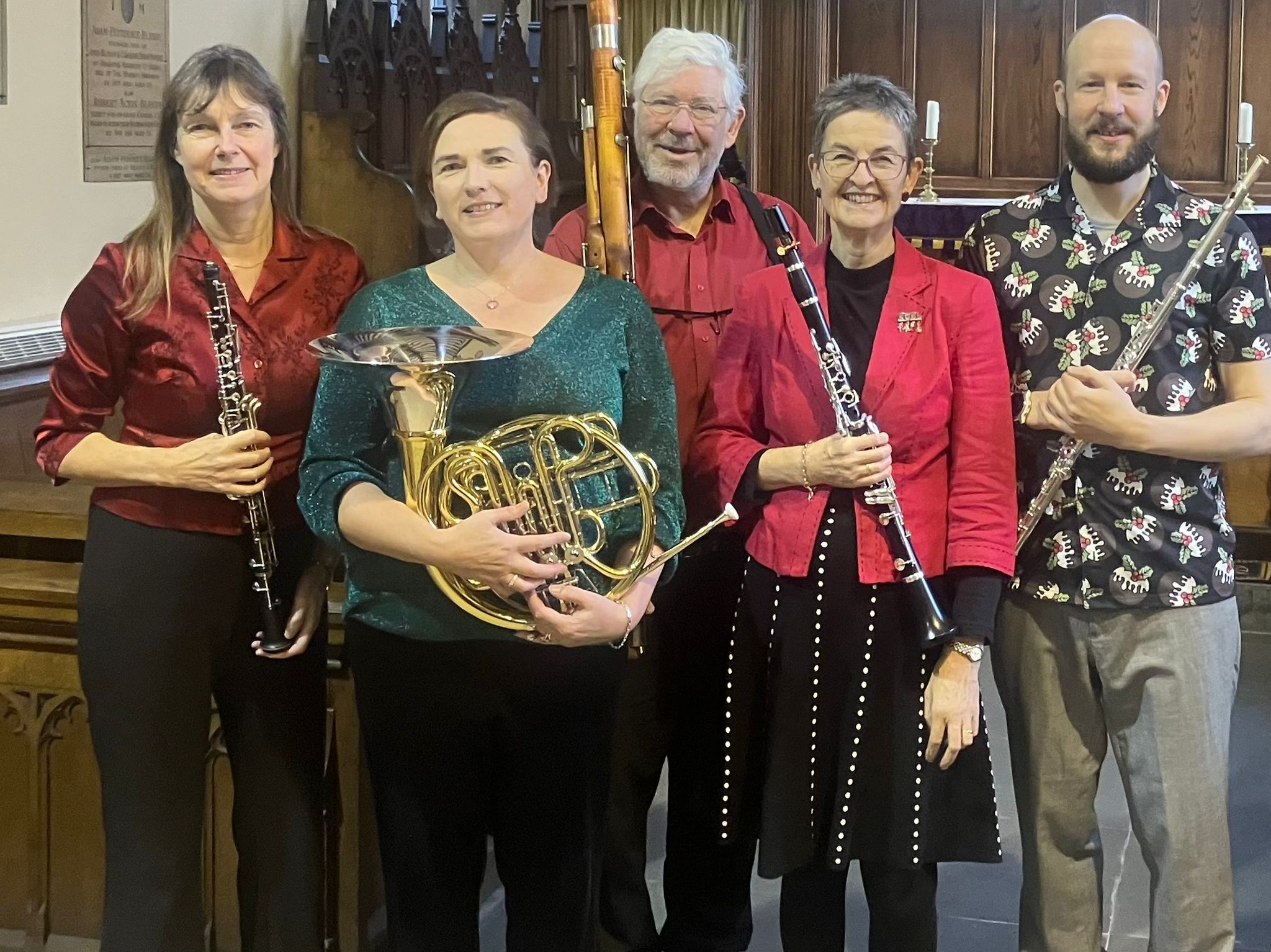
Pavlova Winds
Peter Robertson flute
Wendy Marks oboe
Barbara Stuart clarinet
Jenny Morgan horn
Simon Payne bassoon